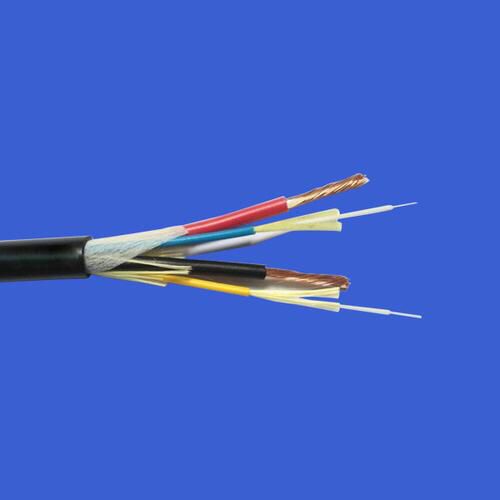
In today's era of explosive AI computing power and accelerated iteration of hyperscale data centers, high speed, high density, and high reliability have become the core demands of optical communication systems, and MMC/MPO multi-core connection technology has long gone beyond the positioning of "ordinary passive components", It has become a key bottleneck that determines the stability and transmission efficiency of high-speed systems - its performance directly affects the bandwidth cap, operation and maintenance costs, and long-term reliability of data centers.
But there is a puzzling phenomenon that prevails in the industry: Many MMC/MPO engineers work for 5 to 10 years, but their skills remain at the basic level. They can skillfully complete product assembly, routine testing, and handle common anomalies in production. However, they are unable to break through the bottleneck, participate in solution-leading, engage in customer technical dialogue, or handle high-level tasks such as complex problem modeling and manufacturing system design.
Many attribute this gap to "lack of experience," but the core truth is that the growth bottleneck of engineers is never the accumulation of experience, but the improvement of the dimension of engineering cognition. Experience is just the accumulation of "repetitive work", and it is the upgrading of cognitive dimensions that enables engineers to move from "passive execution" to "active control". This paper breaks down the complete growth path of MMC/MPO engineers, clearly defining the core goals, capability requirements and breakthrough priorities at each stage to help engineers break out of the internal friction of "repetitive work" and achieve the leap from learn more view pdf