The AI revolution isn’t just reshaping computing power—it’s redefining the very backbone of modern data centers: their internal networks. Once a secondary consideration, the backend connectivity linking AI accelerators, memory, and servers has become an extension of the compute system itself, blurring the lines between networking and processing.
Here’s how this paradigm shift is unfolding:
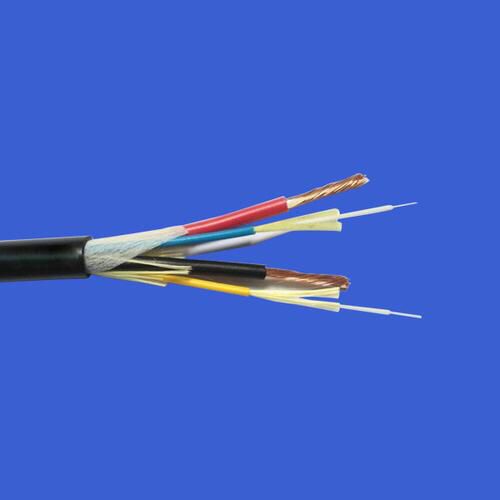
.Fiber Replaces Copper as the New Standard Copper’s low cost and ease of use made it a staple for decades, but AI’s demand for higher speeds and longer distances has exposed its limitations (signal attenuation, electromagnetic interference). Today, nearly all 400 Gbps connections over 5 meters rely on fiber, and even intra-rack links are shifting to optical to support next-gen AI accelerators. The future of AI data centers is 100% fiber.
.From Vertical to Horizontal Scaling Traditional data centers grew vertically—adding more powerful servers to racks. AI’s distributed training demands have flipped this model: we now build horizontally, connecting thousands of processors across racks, rows, and even buildings to operate as a single unified compute structure. These AI clusters require sub-microsecond latency and terabits-per-second throughput, with estimates showing a single GPU may need 3-6 optical transceivers to keep pace.
.Optical Innovation Evolves Beyond Speed
It’s no longer just about faster links (100 Gbps → 400 Gbps → 800 Gbps → 1.6 Tbps). The focus is now on efficiency and density:
.Current solutions: FRO (long-distance robustness), LRO (reduced power/latency), and LPO (ultra-low power for short links) coexist to balance performance and energy use.
.Next-gen breakthroughs: NPO (near-packaged optics), CPO (co-packaged optics), and 2026’s new XPO (extra-dense pluggable optics, 12.8 Tbps per module, 4x higher front-panel density) are rethinking how optics integrate with compute chips to cut signal loss and boost efficiency. Industry analysts like LightCounting project Ethernet optical transceiver and co-packaged optics sales will double in the next five years, with data center internal applications driving most growth—hitting hundreds of millions of units annually to support AI’s explosive scale. What’s your perspective on the biggest shift in data center connectivity? Are you already adopting these optical innovations, or planning to prioritize them in your roadmap? Share your thoughts below
👇 #DataCenter #AI #OpticalNetworking #CloudComputing #TechInnovation #DigitalInfrastructure