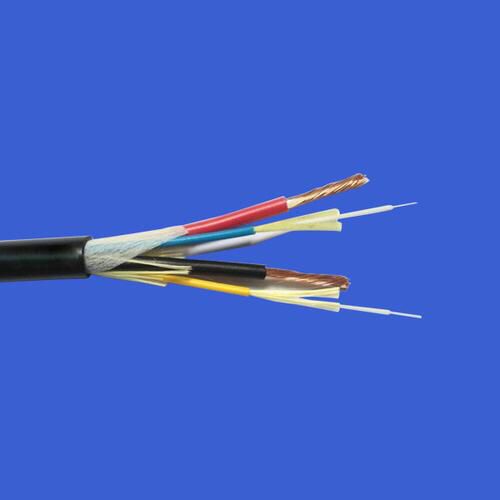
In today's rapidly evolving landscape of smart cities, cloud data centers, and AI-powered network analytics, how exactly does the underlying "main artery" supporting this massive data flow operate? The answer lies within the modern optical transport network architecture combining DWDM, OTN, and IP-MPLS.
1. Four-Tier Architecture: A Clearly Defined "Digital Foundation"
Modern optical transport networks are structured into four dimensions from bottom to top, with each layer performing its specific function to collectively ensure high bandwidth, high reliability, and intelligent operation of the network:
1. Layer 1: Physical Infrastructure Layer (the foundational base)
· Composed of single-mode fiber, optical cable connectors, optical distribution frames (ODF), and equipment room cabinets, it provides a physical path for signal transmission.
2. Layer 2: DWDM Layer (Energy Amplification and Multiplexing)
· Achieve high-density transmission of 80 to 96 wavelengths over a single fiber using wavelength division multiplexing technology, and ensure signal quality for long-distance transmission with EDFA amplifiers.
3. Layer 3: OTN Layer (Flexible Scheduling and Encapsulation)
· Responsible for transporting large-grain services (ODU) and digital cross-connect (DXC). It ensures the stability and security of data transmission within a "hard pipe" through FEC error correction and OAM monitoring.
4. Layer 4: IP-MPLS Layer (Intelligent Decision and Routing)
· This is the "intelligent brain" of the network, providing traffic engineering (TE), fast rerouting (FRR), and QoS assurance, enabling service awareness and VPN/service isolation to ensure data travels along the optimal path.
II. Business Process Encapsulation and Workflow: Six Steps to Implementation
When business data originates from one end, it undergoes a precise "encapsulation journey":
· Access and conversion: Business data is accessed into IP devices and enters the IP-MPLS layer.
· Routing forwarding: The original data is encapsulated into IP packets, and MPLS labels are added according to routing requirements. The IP-MPLS layer performs the encapsulation of IP packets into MPLS labels and handles the corresponding routing.
· Encapsulation and transmission: Data is encapsulated into OTN frames (ODU/OTU). This step adds OAM monitoring overhead and FEC error correction coding to ensure transmission quality and manageability.
· Multiplexing and modulation: The encapsulated OTN signal is mapped to a specific DWDM wavelength, and multiple wavelength signals are combined into the same fiber via an optical multiplexer (MUX).
· Link transmission: The combined optical signal is transmitted via the fiber optic link in the physical infrastructure layer. Along the way, the signal is amplified by EDFA amplifiers and routed through optical cross-connects.
· Remote restoration: After the signal reaches its destination, it is demultiplexed into a single wavelength by an optical demultiplexer (DEMUX), then decoded by OTN and processed at the IP-MPLS layer, ultimately delivering the service data to the remote device. Through a series of demultiplexing, decoding, and IP-layer processing, the data is accurately delivered to the remote service equipment.
3. Core Technology Highlights: Why Is It Irreplaceable?
· High bandwidth: With DWDM technology, it provides ultra-high-capacity transmission capability at the Tbps level.
· High reliability: OTN protection combined with MPLS fast rerouting provides dual safeguards to ensure uninterrupted service.
· Service Awareness: The IP-MPLS layer can identify different service requirements and enable intelligent scheduling.
· Efficient Operations and Maintenance: OAM provides end-to-end visual monitoring, enabling more precise fault detection and ensuring consistent service quality.
In conclusion, whether it's smart cities or all-optical cities, from fiber-dedicated lines to cloud interconnectivity, the DWDM+OTN+IP-MPLS architecture is silently safeguarding every second of our digital lives with its outstanding performance.